
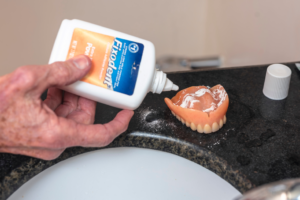
Dentures are the traditional method of replacing all teeth across an arch. They’re more affordable than other offers, as they don’t require surgery, and they allow you to enjoy a full and more functional smile. However, for many people, in order to improve the function and comfort of their prosthetics, they must use denture adhesive. Read on to learn all about the different types of denture adhesive and when replacement is necessary.
How to Tell if You Need Denture Adhesive
Denture adhesive can help dramatically improve the function of your dentures, especially if you find that you’re having a difficult time adjusting to them. They can help alleviate adhesive problems due to dry mouth, which can be caused by certain medications or those with underlying conditions. They can also help reduce facial muscle strain, especially for those who find themselves speaking a lot.
Typically, denture adhesive isn’t a great option for those who are allergic to certain ingredients found in them, are trying to remedy effects from ill-fitting dentures, or patients who have experienced jawbone erosion due to tooth loss. It can be challenging to determine some of these factors on your own, which is why it’s a good idea to schedule an appointment with your dentist for an evaluation.
Types of Denture Adhesives
There are different types of denture adhesives out there, and sometimes, it can be hard to tell which one is ideal for your needs. You can consult with your dentist or weigh the pros and cons of the different types out there:
- Adhesive strips that come pre-cut
- Adhesive paste that can be squeezed from a tube
- Adhesive powder that can be sprinkled onto your denture
Each one offers unique benefits, so don’t be afraid to try them out to see which option you like best!
How to Tell if Your Dentures Need to Be Replaced
Before you use any type of adhesive, you should consider whether your dentures could no longer fit you properly. If this is the case, no adhesive will remedy your issues, and you may more likely benefit from having your dentures either professionally relined or replaced. Some signs that your dentures no longer fit atop your gumline include:
- Your jawbone has shrunk (called bone resorption), which has led to your denture fit feeling different.
- Daily wear and tear that has caused them to feel loose, become thinner, or develop small cracks or fissures.
- Sore spots or irritation along your gumline, such as redness, swelling, or pain while wearing your dentures.
- Difficulty chewing, even with adhesive.
If you stay on top of visiting your dentist every six months for checkups, they will be able to assess the fit of your prosthetic and let you know whenever a reline or replacement is necessary. This will help you avoid unwanted side-effects caused by an improper fit.
With so many different types of adhesive out there, sometimes, it just takes trying a couple of different options to find the one that you prefer. However, if no adhesive seems to help with their functionality, you may be needing professional assistance.
About the Practice
At LIC Dental Associates, we have a large team of experts that includes specialists, allowing you to receive virtually all dental treatments you may need under one convenient roof. From general and cosmetic dentists to implant experts and periodontists, we can address most all tooth loss cases in-house, whether our patients are interested in traditional dentures or implant dentures. To learn more, visit our website or call 718-530-6539.